


Humor has always been a powerful way to connect with people.
Online, it’s become even more influential — funny content spreads faster than serious posts, grabbing attention and encouraging readers to share with friends and family.
But why do some posts go viral while others barely get noticed? The secret lies in understanding the psychology of humor, audience engagement, and shareability.
This article explores what makes digital humor work, how creators can craft shareable content, and why these strategies matter for growing an online presence.
To see this shareability in action, look at how we’ve crafted our Movie Jokes, which are designed specifically to spark social interaction and family sharing.
Why Humor Works Online
Humor taps into human emotion, and emotional content is inherently more engaging. When something makes people laugh, it triggers a dopamine release, which feels good and encourages interaction.
This natural response explains why posts that entertain are often shared widely across social media platforms.
Several factors contribute to humor’s effectiveness online:
- Relatability: People connect with content that reflects experiences they understand or situations they’ve faced.
- Surprise and cleverness: Unexpected wordplay, witty punchlines, or absurd scenarios catch attention.
- Positive emotions: Laughter and joy motivate readers to share, creating organic virality.
Because humor works at both emotional and cognitive levels, it’s a key tool for content creators, marketers, and publishers who want to boost engagement.
The Psychology of Sharing
Sharing is the engine behind viral content. When users encounter something funny, they often want to pass it along to others.
The psychology of sharing humor is driven by:
- Social identity: Sharing funny content lets people showcase their personality and sense of humor.
- Emotional contagion: Laughter is contagious — readers naturally want to spread joy.
- Bonding and connection: Humor helps strengthen relationships, whether online or offline.
This explains why humorous posts often outperform purely informational content. A single clever meme, pun, or humorous post can generate thousands of interactions, driving traffic and visibility.

Wordplay and Clever Writing: The Core of Shareable Humor
The most shareable humor often relies on clever writing and subtle wordplay. Key strategies include:
- Puns and double meanings: Short, clever phrases are easily understood and memorable.
- Unexpected twists: Surprise endings or punchlines make content stick in readers’ minds.
- Conciseness: Short, digestible posts are more likely to be shared across platforms.
Insights from Punsify’s analysis of digital humor show that posts using clever wordplay not only capture attention but also encourage readers to explore related content.
This increases time on site, a valuable metric for SEO and engagement.
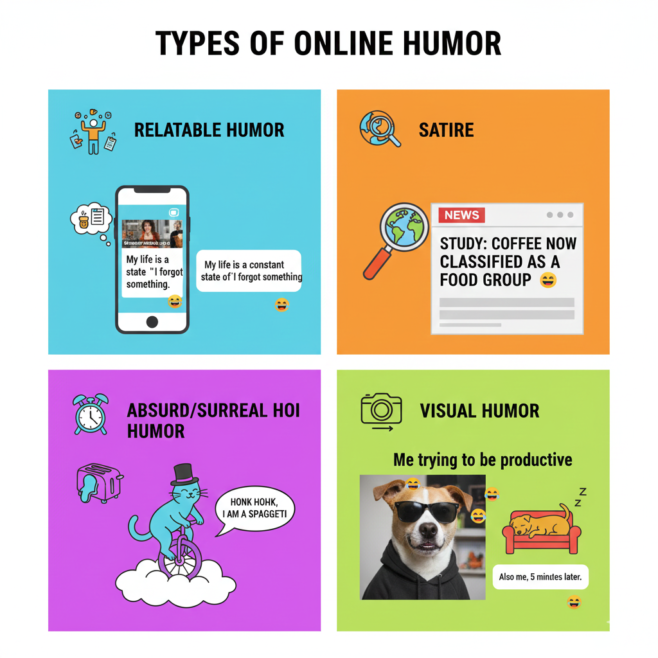
Types of Humor That Go Viral
Not all humor is created equal. Certain types are more likely to be shared online:
- Relatable humor: Observations about everyday life that resonate widely.
- Satire and parody: Playful critique of cultural, social, or political topics.
- Absurd or surreal humor: Unexpected, bizarre scenarios that surprise readers.
- Visual humor: Memes, infographics, and comics that deliver a joke instantly.
Understanding your audience is key. What resonates with one demographic may fall flat with another, so tailoring humor is crucial for engagement.
Timing and Context Matter
Humor also depends on timing and context. Posts tied to trending topics, cultural events, or current news are more likely to go viral.
Conversely, content that misses the cultural context may confuse or alienate readers.
Consistency matters too. Regularly posting humorous content builds audience expectation and loyalty, increasing the likelihood of shares and repeat engagement.

SEO and Engagement Benefits of Humor
Humor isn’t just entertaining — it can significantly boost SEO and online visibility:
- Increased dwell time: Engaging content keeps readers on the page longer.
- Reduced bounce rates: Humor encourages visitors to explore more content.
- Higher shares and backlinks: Funny posts naturally attract inbound links and social shares, enhancing search engine authority.
When humor is tied to relevant topics and keywords, it improves semantic relevance.
This helps search engines understand the content, increasing its chances of ranking for targeted queries.
Practical Tips for Creating Shareable Humor
- Know your audience: Tailor jokes and references to cultural and demographic contexts.
- Keep it short and sharp: Concise, clever writing performs best on digital platforms.
- Incorporate visuals: Memes, images, or infographics amplify humor and shareability.
- Test your content: Use A/B testing to understand what type of humor engages your readers most.
- Link to related content naturally: Provide value by pointing readers to relevant posts, like Punsify’s analysis of digital humor.
By combining these tactics, creators can produce content that delights readers and supports long-term engagement.
Ethical Considerations
While humor is powerful, it must be used responsibly. Offensive, insensitive, or misleading content can damage credibility and trust.
The most effective digital humor respects cultural boundaries and avoids harmful stereotypes while still entertaining.
Measuring Humor’s Effectiveness
Analytics are essential. Track metrics such as:
- Shares and likes: Indicate immediate engagement and virality potential.
- Comments and interactions: Show how the content resonates with readers.
- Click-through to related posts: Measures the effectiveness of internal linking and engagement flow.
By monitoring these metrics, creators can refine their content strategy and improve both engagement and SEO performance.
Long-Term Benefits of Viral Humor
High-quality humorous content provides lasting benefits:
- Brand loyalty: Sites that consistently deliver funny, relatable content build a dedicated audience.
- SEO authority: Increased engagement and inbound links signal content quality to search engines.
- Content amplification: Shareable humor spreads your content beyond your immediate audience.
By linking strategically to authoritative posts like Punsify’s digital humor analysis, creators strengthen the ecosystem while boosting SEO authority.
Why We Can’t Stop Laughing: FAQs About the Secret Formula Behind Viral Humor
Discover why some jokes and funny content spread like wildfire. Explore the secret formula behind viral humor and why people can’t stop sharing it online.
What makes humor go viral online?
Humor goes viral when it’s relatable, surprising, and easy to understand. People share content that sparks a strong emotional reaction, especially laughter.
Does timing affect whether a joke spreads?
Absolutely. Posting at the right moment, like during trending events or cultural moments, increases the chances of humor catching on.
Are some types of jokes more shareable than others?
Yes, short, clever, and relatable jokes often travel fastest. Memes, puns, and situational humor resonate because they’re easy to digest and share.
How important is relatability in viral humor?
Very. People share jokes they see themselves in or that reflect experiences they understand. Relatability creates connection, which drives sharing.
Can visual elements make humor more viral?
Definitely. Images, GIFs, and videos amplify humor by showing expressions, reactions, or absurd situations that text alone might not capture.
Does surprise play a role in funny content going viral?
Yes. Unexpected twists, punchlines, or clever wordplay grab attention and make people more likely to share.
Are certain platforms better for viral humor?
Platforms like TikTok, Instagram, and Twitter thrive on short, shareable, humorous content. The platform’s culture shapes how humor spreads.
How does social proof influence the sharing of jokes?
When people see others laughing, liking, or sharing, they’re more likely to join in. Viral humor often snowballs thanks to social proof.
Can understanding your audience increase the chances of a joke going viral?
Absolutely. Humor that matches the audience’s interests, language, and values resonates more, making it more likely to be shared widely.
Is there a formula to create viral humor consistently?
While there’s no exact formula, combining relatability, surprise, simplicity, timing, and shareability significantly boosts the chances of content going viral.
Conclusion
Digital humor is a powerful tool for engagement, virality, and SEO growth. Well-crafted, clever, and audience-aware content keeps readers laughing, sharing, and returning for more.
Strategically linking to authoritative sources like Punsify enhances credibility while concentrating SEO value.
By understanding the psychology of humor and applying these insights, creators can craft content that entertains, engages, and ranks well in search engines.