


Headlines are the first thing readers see. In digital news, where attention spans are short and competition for clicks is fierce, the headline often decides whether someone reads an article or scrolls right past it.
Research shows headlines are incredibly powerful — they influence clicks, time on page, and sharing behavior.
Editors have increasingly noticed this and are paying closer attention to language choices in headlines to balance clarity and engagement.
Wordplay has become one such tool, when used responsibly and accurately.
Data Insight: Studies show headlines contribute up to 80% of user engagement, and many readers never read beyond the headline itself.
While news editors use wordplay to slow down the scroll, you can see these principles in action with our Quick Jokes that are designed for maximum impact in a single glance.”

The Critical Role of Headlines Online
Online readers behave differently than print readers. They scan headlines quickly, often making split‑second decisions about what to click.
In one structured study, readers “scanned” headlines first before engaging with content, showing that headlines shape reader behavior early in the process.
Example: A recent investigation into scanning patterns revealed that people read headlines far more frequently than the full text, meaning the first impression has a disproportionate influence on reader interest.
Because of this scanning behavior, editors and writers craft headlines not just to inform but to signal value quickly.
When a headline hints at relevance, value, or insight — even subtly through wordplay — it can prompt readers to click and spend time on the article.
Data Insight: Research highlights that readers make a content decision in less than a second, so a compelling headline significantly increases the odds of engagement.
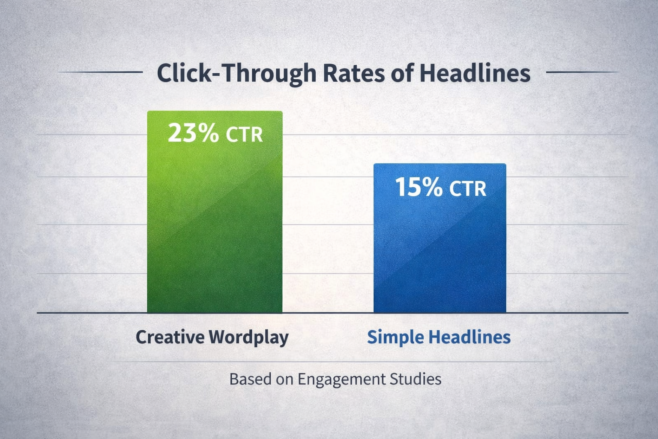
How Wordplay Works Without Misleading Readers
Wordplay is not humor or a joke — it’s the use of familiar language patterns to make a headline more memorable while still being truthful.
It can trigger recognition and curiosity without misrepresentation.
For example, replacing a dull phrase with a familiar expression can create a small cognitive spark, prompting readers to engage.
Neuroscience research into headline perception shows that headlines need to communicate value quickly — and familiar phrasing can help.
Data Insight: Cognitive studies show effective headlines tap into simple linguistic triggers that readers process rapidly, helping explain why some headlines outperform others online.
Balancing Creativity with Clarity
Editors know that headlines must be honest. Creativity that hurts clarity can backfire, driving high bounce rates and lower engagement.
That’s why the best wordplay is subtle, not misleading.
Professional editors often follow a few simple principles:
- The topic must be clear within a few words
- The tone must match the article’s content
- Creativity must not distort meaning
Data Insight: Research on effective headlines highlights the importance of balancing intrigue with readability, showing that overly clever headlines often perform worse than simple, clear titles. Search Engine Journal
What Studies Say About Headline Structure and Engagement
Large‑scale headline analyses offer insight into what drives clicks and engagement:
- A 3‑million headline study found that certain words like “who” increased click‑through rates significantly, while others like “how to” actually decreased performance.
- Research also reveals that headlines between about 60–65 characters tend to perform better in search results and social media feeds.
- In another analysis, use of familiar phrasing and common words increased engagement, as readers prefer clarity over complexity.
These patterns show that word selection, structure, and headline length matter — and that simple, accessible language often outperforms overly complicated phrasing.
How Wordplay and Language Influence Trust
Wordplay works best when it supports the content rather than overselling it.
Misleading or clickbait headlines may get a one‑time click but harm long‑term trust and loyalty.
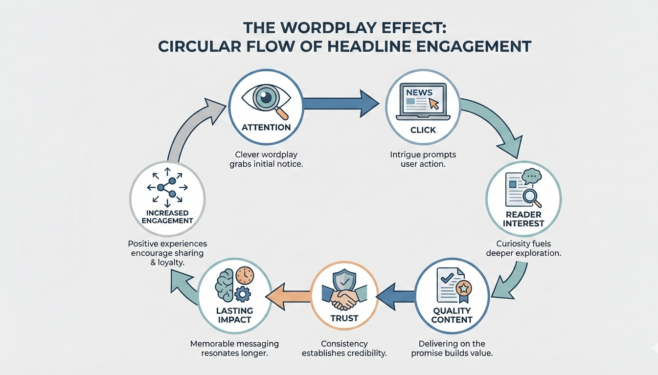
Studies suggest that engaging, accurate headlines help readers stay longer, return more often, and share content more broadly.
Over time, this builds credibility and trust — what Google considers a key E‑E‑A‑T signal.
Data Insight: Research continues to show that misleading headlines decrease long-term engagement and increase bounce rates, hurting both reader experience and search performance.
Headline Strategy and SEO Signals
Search engines use user behavior data to help rank content. If readers click a headline and stay longer on the page, that signals relevance and quality to search systems.
Wordplay that enhances clarity and context can help match reader intent with content.
Example: A headline that clearly states what the reader will learn — even with a subtle twist — is more likely to satisfy user intent and signal positive engagement metrics to search engines.
Data Insight: Data shows headlines optimized for clarity and reader expectation can increase dwell time and reduce bounce rate — both positive SEO signals.

Cultural and Audience Considerations
Headlines must not only be engaging but also culturally appropriate and widely understandable.
Studies on international readers show that simple, clear headlines are more consistently interpreted across regions than those relying on heavy humor or obscure wordplay.
This means headlines that rely on widely familiar language patterns perform better than those requiring niche cultural knowledge.
Data Insight: Research confirms that simpler phrasing with universal language gets higher engagement across diverse audiences.
Long-Term Engagement and Brand Trust
Wordplay is a long game. It’s less about instant clicks and more about establishing a recognizable tone.
Publications that use subtle, insightful headline language build loyal audiences over time because readers feel respected and informed.
Data Insight: Brand loyalty and repeat readership correlate with headline clarity that matches content — readers return to sources they feel deliver consistent, honest content.
Practical Tips for Using Wordplay Effectively
Here are some evidence‑backed headline practices worth applying:
- Use simple, familiar words that match reader expectations.
- Keep headlines readable and concise (around 60–65 characters).
- Test multiple headline versions to see what performs best.
- Ensure headline meaning matches article content — clarity beats cleverness.
Why Subtle Wordplay Matters in News Headlines
Wordplay matters not as entertainment but as a linguistic tool that enhances readability, signals relevance, and respects reader intelligence.
It helps headlines stand out without exaggerating or misrepresenting the information.
Reputable publishers who use wordplay carefully tend to earn more sustained engagement over time because readers stay longer and share content that feels honest and insightful.
Data Insight: Multi‑platform headline analyses show that content with clear, engaging headlines earns more return traffic and shares, a sign of lasting reader trust.
Looking Ahead: Headlines in a Data‑Driven World
As AI and analytics shape publishing, understanding headline performance data becomes even more important.
Tools that analyze headline variants against real engagement metrics help editors make informed choices.
Future trends will likely include more personalized headlines, but the core principle remains — clarity and accuracy build trust, and trust drives long‑term engagement and SEO success.
Conclusion
Wordplay in headlines is not a gimmick.
It’s a language strategy that, when used with clarity and accuracy, improves engagement, supports SEO, and builds reader trust.
By combining subtle creativity with research‑backed headline strategies, writers can craft headlines that attract clicks while satisfying reader expectations — an outcome that both editors and search engines reward.